Quick answer
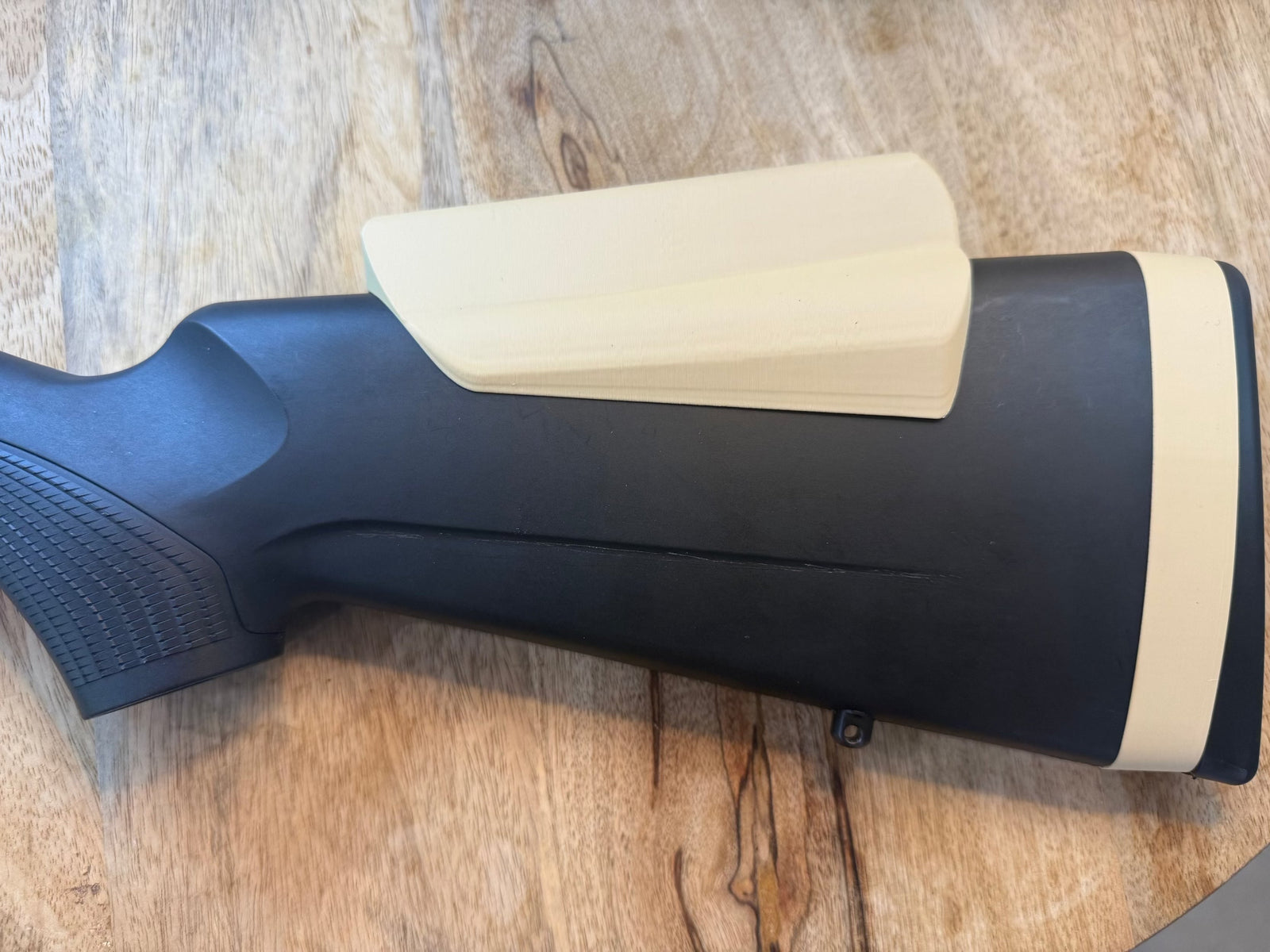
Should you 3D print or buy a Tikka cheek riser?
DIY makes sense when you want to prototype cheek height, enjoy the making process, and can test fit carefully. Buying makes more sense when you want adjustable height, Tikka OEM-stock fit, and fewer rounds of trial and error.
Before choosing either path, run the Tikka Fit Checklist to separate cheek height, length of pull, and eye relief on your actual rifle.
If you own a 3D printer, a DIY Tikka cheek riser can look like the obvious answer. Free files exist, the raw print cost can be low, and it feels satisfying to solve a rifle-fit problem yourself. For some shooters, that is a perfectly reasonable starting point.
The catch is that the hard part is not just printing a shape. The hard part is getting the height, stock contact, mounting method, and repeatability right on your specific Tikka stock and scope setup.
When DIY makes sense
A DIY cheek riser is most useful when you treat it as a test tool rather than a finished answer. It can help if you:
- Already own a printer and enjoy iterating on small parts.
- Want to test your cheek-height range before buying anything.
- Have time to print, fit, adjust, and re-check the rifle more than once.
- Understand that online files may not match your stock shape or scope setup.
Used this way, a home print can be valuable. It lets you discover whether the real issue is cheek height, length of pull, eye relief, or a combination of all three.
Where DIY usually costs more time than expected
Height is personal
A cheek riser is only right if your eye lands naturally behind the scope. A file that worked for someone else's rings, scope, stock length, and face shape may be too high or too low for you.
Stock contact matters
Tikka OEM-stock combs have curves that matter. If the underside of the riser does not sit cleanly on the comb, it can rock, gap, or need extra fitting. That can turn a quick print into several rounds of adjustment.
Mounting method matters
A riser that feels stable on the bench still needs to stay put during normal rifle handling and shooting. Fit, contact area, and the mounting method all matter. If you are still testing height, use a temporary setup and verify the sight picture again before making anything more permanent.
Time is part of the price
A home print can be cheap in raw print cost, but a design-print-fit cycle can take hours. If you enjoy that work, DIY is part of the fun. If you just want the rifle ready, a purpose-built adjustable riser is often the faster route.
The best DIY use case: find your height before buying
The smartest use of DIY is a temporary height test:
- Make a rough temporary riser or build up the comb in small steps.
- With the rifle unloaded and pointed safely, shoulder it with your eyes closed.
- Open your eyes and check whether the sight picture is full and natural.
- Repeat after your length of pull is set, because stock length changes head position.
That test tells you the height range you actually need. From there, you can decide whether to keep iterating at home or buy an adjustable riser that lets you tune the final position on the rifle.
The full setup method is in the no-guesswork cheek riser height guide.
When buying makes more sense
Buying makes more sense when the rifle needs to be ready without a long tuning loop. The Nokka Drop Comb Cheek Riser was built for Tikka T3, T3x, and T1x OEM stocks, with adjustable height and a mounting method that avoids permanent stock modification.
It is the better path if:
- You already know cheek height is the problem.
- You want to tune height around a real scope and ring setup.
- You may change optics later.
- You would rather spend time shooting than revising print files.
DIY or buy?
Choose DIY if you enjoy the process and want a cheap way to test height. Choose a purpose-built adjustable riser if you want the fit decision to be simpler and the rifle to be ready sooner.
If the checklist points to cheek height only, start with the Drop Comb Cheek Riser. If the checklist also points to stock length, the Tikka Performance Kit pairs the riser with the LOP Spacer Kit.
Shop the Drop Comb Cheek Riser ->
Frequently asked questions
Can I 3D print a cheek riser for my Tikka T3x?
Yes. A home-printed riser can be useful for testing cheek height and learning what your setup needs. Expect to check the fit carefully and iterate if the file was not designed around your specific stock and optic setup.
Is a DIY Tikka cheek riser cheaper than buying one?
It can be cheaper in raw print cost, but the real cost includes design time, test fitting, and revisions. If you enjoy that work, DIY can be worthwhile. If you want a faster fit path, buying is usually simpler.
Are free Tikka cheek riser files good enough?
Some can work as prototypes, but quality and fit vary. Check the stock contact, height, and mounting approach carefully before relying on a free file as a finished field setup.
Should I test cheek height before buying a riser?
Yes. Set length of pull first, then shoulder the unloaded rifle with your eyes closed, open your eyes, and check whether the scope image appears naturally. That tells you whether cheek height is really the issue.
When is a commercial adjustable riser the better choice?
It is the better choice when you want adjustable height, OEM-stock fit, and fewer rounds of trial and error. It also helps if you may change scopes or rings later.
Make your Tikka fit you
The Drop Comb Cheek Riser and LOP Spacer Kit, bundled and set up to work as a system — at a price that beats buying them separately.

