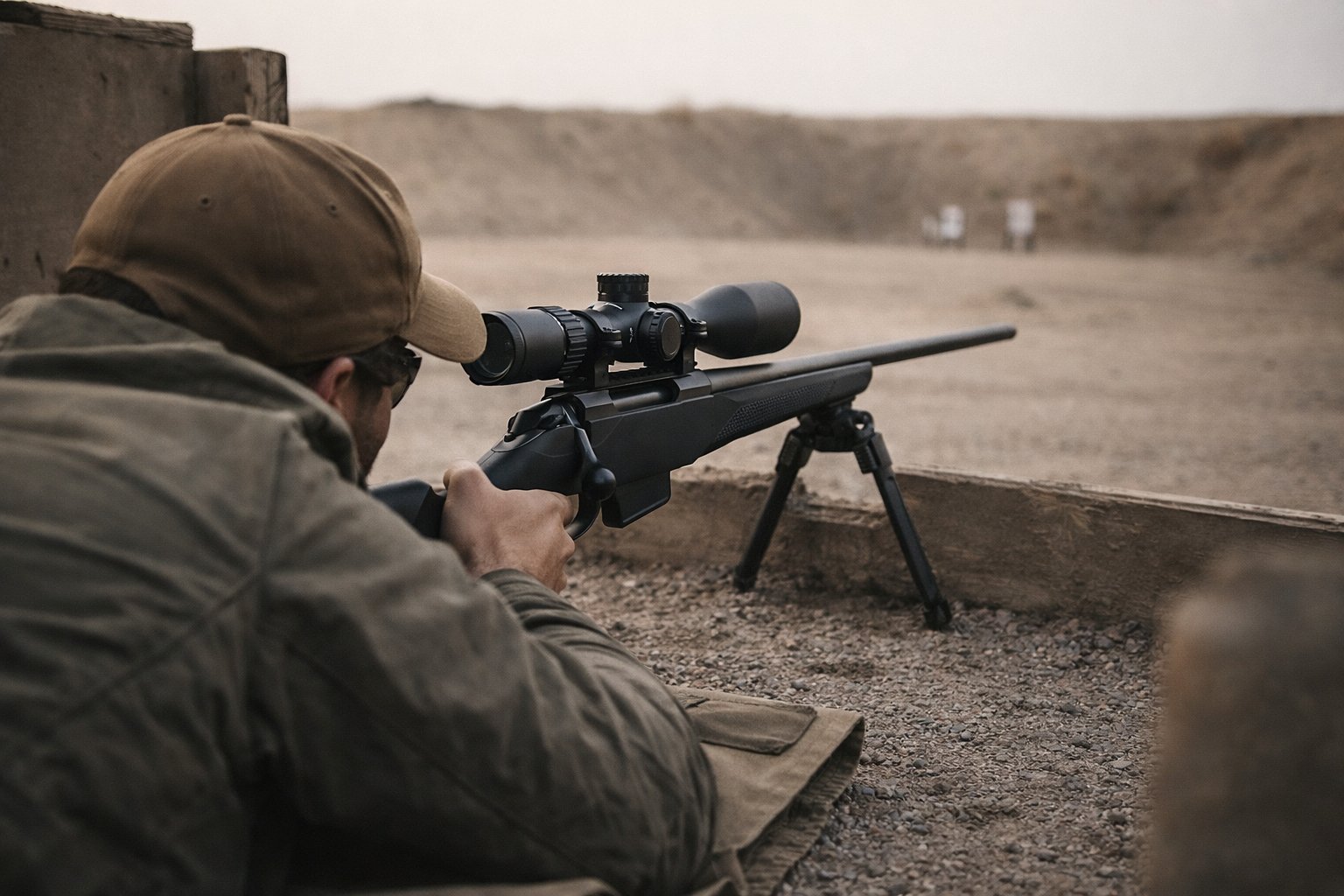
Start by identifying the cause on the actual rifle. Set eye relief, check fit, verify optic mounting and rifle condition, then assess trigger feel and ammunition under controlled conditions. A cheek riser, LOP option, or Performance Kit can support repeatability when the corresponding fit problem is confirmed, but no accessory guarantees smaller groups.
The Four Pillars of Tikka Rifle Accuracy
Before buying gear, establish a baseline and inspect the actual system: rifle condition, optic and mounting, ammunition, support, position, conditions, and shooter input. Fit and trigger feel are two possible variables, not a complete accuracy formula.
Check the manufacturer specification and condition of the exact rifle. Do not assume the rifle is fault-free or attribute a result to the shooter interface without evidence.
Before chasing accuracy upgrades, start with the Tikka Fit Checklist and confirm whether position, cheek height, or LOP is moving the rifle.
Ergonomics — The Foundation Most Shooters Ignore
Fit is one variable to check after eye relief and before choosing a stock-fit part.
Cheek-height check: Set eye relief and parallax for the actual optic, then check whether the eye remains below the sight picture in a natural head position. A cheek riser can provide a repeatable reference on a listed factory-stock application, but it does not guarantee point of impact or group size.
Added length of pull: Set eye relief first and check the actual stock in the position and clothing used. The Original LOP Kit adds 10 or 20 mm as supplied; it cannot shorten the factory stock. If the stock is already too long, do not add spacing.
If your rifle is a T3x ACE or a UPR, the length of pull kit for the T3x ACE and UPR is the matching part; the standard kit is for the factory hunting stock.
Check cheek height and added length separately. Use the Performance Kit only when both corrections are confirmed on a supported factory-stock setup. Current options are A$79–A$93, saving A$9–A$15 versus the matching separate parts.
Trigger control — follow the manufacturer specification
Your trigger is the last point of contact before the shot breaks. Everything you have done with your position, breathing, and sight picture comes down to that single moment of trigger press.
Trigger specifications and suitable pull weights depend on the exact model, intended use, governing rules, and manufacturer instructions. Do not use a generic factory-weight estimate or assume a lighter trigger improves consistency or safety.
The Nokka Trigger Spring is currently unavailable while compatibility and pull-weight compliance are revalidated.
No compatible application is currently published. A Tikka T3, T3x, or T1x model label alone is not enough to establish fit.
The Tikka manual specifies a trigger-pull adjustment range of 2.5–4 lb and says not to reduce trigger weight below 2.5 lb.
If a Nokka spring is already installed, do not rely on earlier compatibility or pull-weight claims. Have a qualified gunsmith inspect and set the trigger before use.
Ammunition — Consistency Is Everything
Ammunition is a separate variable. Use only ammunition appropriate for the exact rifle and evaluate any comparison under controlled, lawful conditions; no generic velocity or distance threshold predicts a group result.
For factory ammunition, follow the rifle and ammunition manufacturers’ current specifications and local law. Do not transfer generic bullet-weight or purchasing advice across models and chamberings.
If you reload, follow current component and equipment manufacturers’ published data and procedures. A reloading block can keep cases organised, but it does not validate a process step, charge, velocity spread, safety, or accuracy.
Rifle Stability — Support Your Position
Support and position are additional variables. Compare changes under the same safe range conditions rather than assuming one setup produces an accuracy result.
From the bench, use a solid front rest and rear bag. Let the rifle sit naturally — if you are muscling it onto target, your groups will reflect that tension. From prone, get your bipod height right and use a rear squeeze bag to make fine elevation adjustments.
Do not alter barrel clearance or apply a generic action-screw torque from this guide. Inspect the exact model and follow the current rifle and stock manufacturers’ procedures; use a qualified gunsmith when the required specification or work is unclear.
Your Upgrade Pathway — Budget to Competition
Not everyone needs to do everything at once. Here is how I would prioritise upgrades based on budget and shooting goals:
Stage 1 — Diagnose Fit Before Buying
Use a cheek riser only when comb height is confirmed low. Use the Performance Kit only when both cheek height and added length need correction. Current kit options are A$79–A$93.
Stage 2 — Trigger Spring availability
Stage 3 — Ammunition Optimisation ($39+)
Use the reloading block only as an organisation aid within the component and equipment manufacturers’ documented process. Any factory-ammunition comparison must follow the rifle and ammunition specifications.
Stage 4 — Fine Tuning
If the baseline remains outside the expected result, stop adding parts and inspect the evidence. Follow manufacturer support paths or use a qualified gunsmith for rifle, optic, bedding, or barrel concerns.
The Bottom Line
Accuracy diagnosis has no universal purchase order. Establish a baseline, inspect the actual rifle and optic, set eye relief, check fit, and assess trigger feel and ammunition separately. For a broader product decision path, see our guide to Tikka accessories and upgrades.
Nokka Tactical products are designed in Finland, made in Australia, and backed by a 30-day fit guarantee. Australian orders over A$75 ship free; international shipping, duties, and taxes are shown before payment.
→ See the full Tikka fitment chart — which part fits T3 / T3x / T1x / ACE / UPR
Make your Tikka fit you
The Drop Comb Cheek Riser and LOP Spacer Kit, bundled and set up to work as a system — at a price that beats buying them separately.

