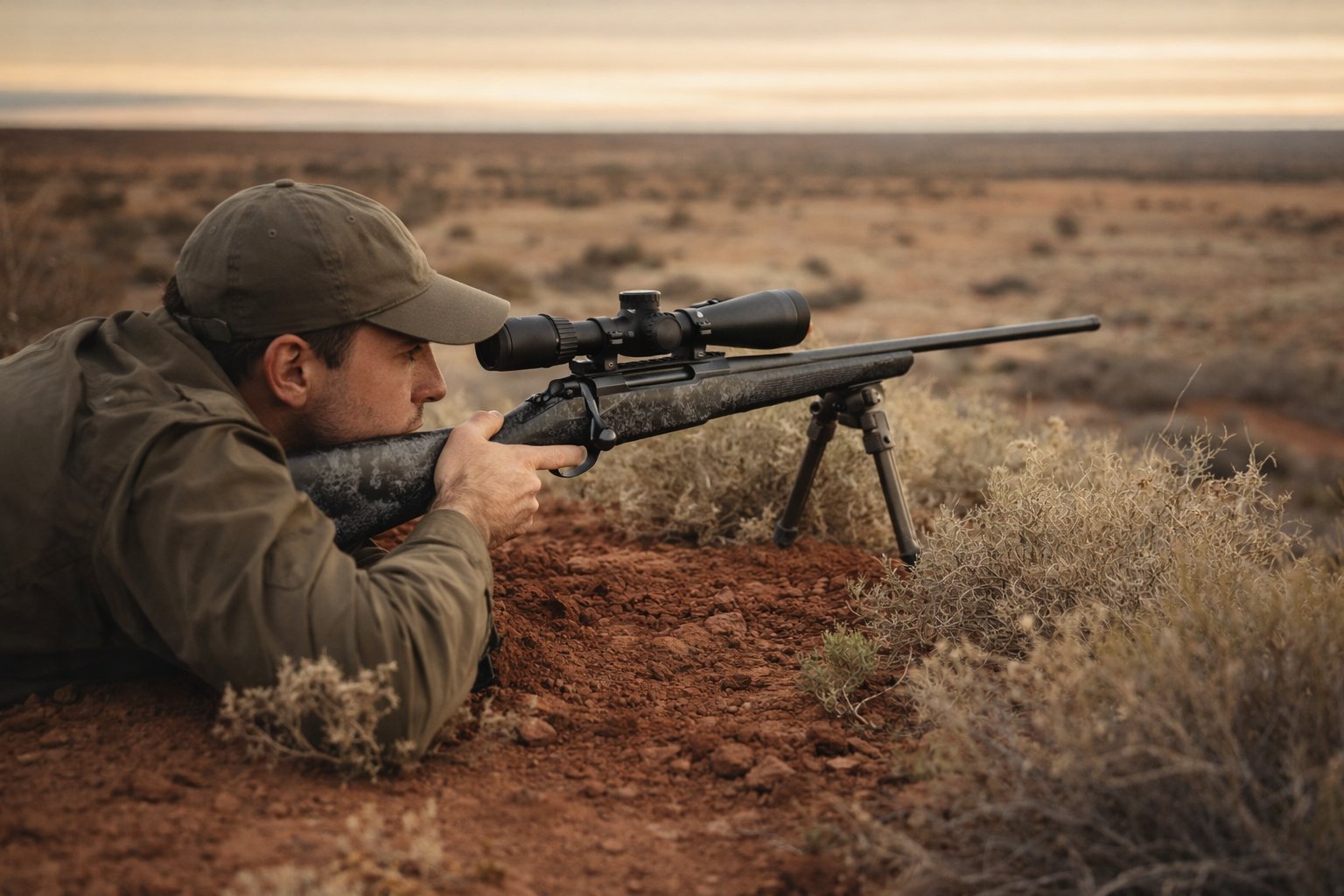
Improve a Tikka's ergonomics by fixing fit, not the rifle: set eye relief with the actual scope and rings, then use the Tikka Fit Checklist to decide whether length of pull, cheek height, trigger feel, or scope position is the first problem to solve. If both length of pull and cheek height need work, the Nokka Performance Kit bundles those two fit parts at a better price than buying separately.

Tikka rifles are accurate out of the box. The action is smooth, the barrel shoots well, and the build quality is hard to fault for the price. But accuracy and consistency aren't the same thing — and the gap between them almost always comes down to fit.
A rifle that doesn't fit you forces you to compensate. You strain your neck to find the reticle. You stretch or cramp to reach the trigger. Your cheek weld changes shot to shot because the comb is too low for your scope. Each of these is a small inefficiency on its own. Stacked together, they're the difference between a rifle that groups and a rifle that doesn't — and the cause has nothing to do with the rifle.
The good news: most Tikka ergonomics problems are fit and setup problems you can diagnose before buying parts. Start with the Tikka Fit Checklist, then work through the four areas that matter most.
1. Length of pull — the foundation
Length of pull (LOP) is the distance from the trigger face to the centre of the recoil pad. Factory Tikka LOP is around 13.4 inches. Whether that's right for you depends on your arm length, your shooting position, and what you're wearing.
If your LOP is too long, you're reaching for the trigger — your finger wraps around it at the wrong angle and your pull isn't straight back. Too short and you're cramped behind the scope instead of settling into a natural position.
If the checklist points to length of pull, a spacer between the stock and recoil pad is the clean fix. The Nokka LOP Spacer Kit includes one 10 mm spacer, one 20 mm spacer, and longer screws. For every LOP spacer, use one spacer by default. Stacking any combination of LOP spacers can be done only in special cases, but a multi-piece stack does not create the strongest possible connection and is not our recommended default. If stacking is required, glue the spacer pieces together before final installation and use only the confirmed locating and fastening hardware for the setup. Contact us first if the stacked setup and hardware have not already been confirmed.
Full walkthrough: How to Adjust Length of Pull on Your Tikka Rifle

2. Cheek weld — match your comb to your scope
Factory Tikka stocks have a comb height designed for iron sights. Mount a scope and your eye needs to sit 15–25mm higher than where the factory comb puts it. Most shooters compensate by lifting their head, tilting it, or pressing down harder. None of those are repeatable.
If the checklist points to cheek height, a riser raises the comb so your eye sits behind the scope without lifting your head. The Nokka Drop Comb Cheek Riser mounts to the OEM stock with double-sided tape or removable glue — no drilling or permanent stock modification.
The full explanation: Why Comb Height Matters: Getting Your Cheek Weld Right

3. Eye relief — set it before judging stock fit
Eye relief is the distance between the rear of the scope and your eye where you see a full, shadow-free sight picture. Most shooters set eye relief when they mount the scope and never touch it again. That first setting matters because a scope that sits too far forward or back can make length of pull and cheek height feel wrong.
The right approach: set eye relief with the rifle unloaded and shouldered naturally before choosing fit parts. Then check length of pull and cheek height. If you add spacers or a riser later, re-check the sight picture and fine-tune scope position if needed.
4. Trigger Spring availability
The Nokka Trigger Spring is currently unavailable while compatibility and pull-weight compliance are revalidated.
No compatible application is currently published. A Tikka T3, T3x, or T1x model label alone is not enough to establish fit.
The Tikka manual specifies a trigger-pull adjustment range of 2.5–4 lb and says not to reduce trigger weight below 2.5 lb.
If a Nokka spring is already installed, do not rely on earlier compatibility or pull-weight claims. Have a qualified gunsmith inspect and set the trigger before use.
Full details: Tikka T3x Trigger Spring Replacement: What to Expect
The setup order
If you're doing multiple changes, the order matters:
- Eye relief and scope position (lock in the optic before judging stock fit)
- Length of pull (check reach and shoulder position after eye relief is set)
- Cheek height (match where your head naturally lands behind the optic)
- Trigger feel (separate from fit, and safest to review after the rifle settles naturally)
If the checklist shows both length of pull and cheek height need work, the Nokka Performance Kit bundles the LOP Spacer Kit and Cheek Riser at a better price than buying those parts separately — it covers steps 1 and 2 in one box.
Your Tikka is already a good rifle. Make it fit you and it becomes a great one.
Make your Tikka fit you
The Drop Comb Cheek Riser and LOP Spacer Kit, bundled and set up to work as a system — at a price that beats buying them separately.

