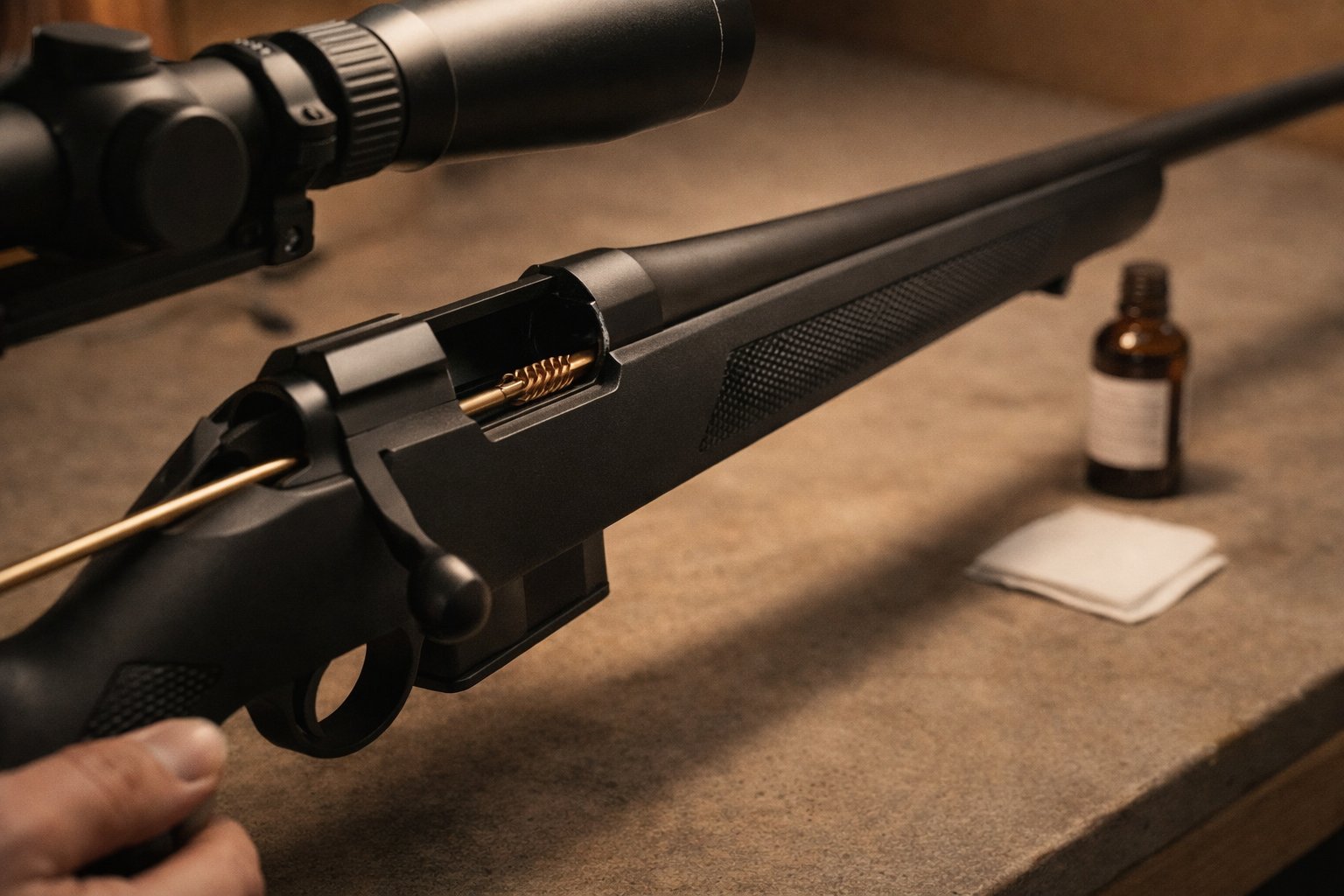
Quick answer: Keep a Tikka T3x or T1x reliable by cleaning the bore when fouling, moisture, or field grime builds up, wiping the bolt and action faces, checking action-screw tension against the manufacturer specification, and keeping oil away from the trigger mechanism. If a setup change has made the rifle feel awkward behind the scope, use the Tikka fit checklist before choosing parts.
Start With A Safe Maintenance Routine
Maintenance should make the rifle predictable, not introduce new problems. Before cleaning or inspecting anything, unload the rifle, remove the magazine, open the bolt, and confirm the chamber is empty. Work on a clear bench with the ammunition stored away from the rifle.
The routine below is intended for normal owner-level care. If you find damaged parts, unusual trigger behavior, loose bedding hardware you cannot confidently reset, or anything that affects safe function, stop and use a qualified gunsmith or the manufacturer support path.
Barrel Cleaning: When It Is Worth Doing
There is no single cleaning interval that fits every Tikka owner. A rifle used in rain, dust, mud, or humidity deserves attention after the trip even if the round count was low. A range rifle can usually be cleaned on a regular schedule based on fouling and group behavior, rather than after every small session.
Use a bore guide where practical, clean from breech to muzzle, and avoid aggressive scrubbing as a default habit. Let the solvent do the work, follow the product instructions, and finish with dry patches before storage. If you leave a light protective oil film in the bore for long storage, patch it out before shooting again.
Bolt, Action, And Lug Recesses
The Tikka bolt is easy to remove and wipe down. Clean visible carbon, dust, and moisture from the bolt body, bolt face, extractor area, and lug recesses with a cloth, cotton bud, or appropriate solvent. Use only a light film of oil where the manufacturer recommends lubrication.
Too much oil is a common maintenance mistake. Excess lubricant can collect grit, migrate into places it does not belong, and cause problems in cold or dusty conditions. The goal is clean contact surfaces, not a wet action.
Action Screws, Stock Hardware, And Fit Parts
Check action screws and stock hardware periodically, especially after travel, wet weather, or a long session. Use the current manufacturer torque specification for your stock and bottom-metal combination rather than guessing. If a screw does not start cleanly, stop instead of forcing it.
If you changed scope, rings, rail, stock position, recoil pad, or cheek height, maintenance is also a good time to confirm fit. Eye relief comes first, then length of pull, then cheek height. The fit checklist walks through that order so you do not buy a part for the wrong symptom.
Trigger Group Care
For normal owner maintenance, keep debris and oil out of the trigger group. Do not soak the trigger mechanism with wet lubricant. If the trigger feels gritty, inconsistent, or unsafe, treat that as a function issue rather than a cleaning shortcut.
For pull-weight questions, adjustment, or spring-swap decisions, read the Tikka trigger upgrade guide and function-check the rifle before loading it. If you are not completely comfortable with trigger work, use a qualified gunsmith.
After Rain, Dust, Or A Hunt
Field use changes the priority. Remove moisture first, wipe exposed metal, check the bore, clean around the bolt face, and inspect any stock or optic hardware that may have been bumped. Dust and grit are abrasive, so remove them before adding lubricant.
If the rifle suddenly feels different after a trip, do not assume it needs a new part straight away. Confirm the optic has not moved, the stock hardware is still correctly seated, and your eye relief still works from your real shooting position. Then use the fit checklist if cheek weld, length of pull, or head position still feels wrong.
What Maintenance Cannot Fix
Cleaning will not fix a stock that is too long, a comb that leaves your head floating above the scope, or an optic setup that forces you to crawl the stock. Those are fit and setup problems. The fastest path is to diagnose the symptom first, then choose the part only if the checklist points there.
For broader setup decisions, see the Tikka T3/T3x accessories guide or the cheek-riser height guide. For uncertain fit, keep the checklist as the first step.
Simple Maintenance Checklist
- Unload the rifle and verify the chamber is empty.
- Clean moisture, dust, and carbon from exposed metal and the bolt face.
- Clean the bore when fouling, conditions, or your routine call for it.
- Use light lubrication only where appropriate.
- Check action screws and stock hardware against manufacturer guidance.
- Confirm optic position and eye relief after bumps, travel, or hardware changes.
- Use the Tikka fit checklist if the rifle still feels wrong behind the scope.
Make your Tikka fit you
The Drop Comb Cheek Riser and LOP Spacer Kit, bundled and set up to work as a system — at a price that beats buying them separately.

