Reloading for a Tikka T3x rewards consistency, not shortcuts. Start with published load data, change one variable at a time, keep brass lots organised, and stop if you see pressure signs. A reloading block helps keep cases upright and separated during prep, charging, and seating, but accuracy gains still depend on the rifle, components, load data, and shooter.
Reloading for a Tikka T3x is one of the most useful precision-rifle projects you can take on. The platform is capable enough that ammunition consistency, rifle setup, and shooter input all show up clearly on target.
Here's how to set up a reloading bench for a Tikka T3x or T1x, and what matters most when you are trying to make your process more repeatable.
Why the Tikka T3x rewards careful reloading
The Tikka's free-floated barrel and consistent action geometry mean ammunition quality can show up clearly in your groups. A well-sorted handload — consistent primer seating, uniform powder charge, and cartridge overall length matched to safe published data — can help tune the rifle to a specific barrel. It is not a guaranteed improvement over every factory load.
Variation also shows up clearly. Inconsistent sizing, uneven primer seating, mixed brass lots, or inconsistent powder charges can all make load testing harder to interpret. The goal is to remove avoidable process variation so the target tells you something useful.
Brass preparation: where consistency starts
For Tikka T3x reloading, consistent sizing, case length, neck tension, and primer seating matter more than chasing exotic steps too early. Follow your die maker's instructions and use published load data for the exact cartridge and components you are loading.
Sort brass by headstamp and lot when possible. Trim cases to consistent length after sizing. Deburr and chamfer the case mouths. If you are chasing the last bit of consistency, track primer-pocket condition, case growth, and neck tension over multiple firings.
The reloading bench: keeping brass organised
The physical organisation of a reloading session matters more than most beginning reloaders expect. Mixed-up cases (wrong lot, wrong headstamp, wrong trimmed length) introduce variables you are trying to remove. Tipped cases during priming or charging can slow the process and increase the chance of mistakes.
A precision reloading block keeps your brass upright and organised at every stage of the process — after decapping, during priming, during charging, and before seating. It helps prevent mixed-up cases and makes it easier to spot missing, tipped, or out-of-sequence rounds before the next step.
Popular Tikka T3x calibres and reloading notes
6.5 Creedmoor
A popular T3x calibre for precision shooting. Good brass and careful sizing can give useful case life. 130-143 grain projectiles are common for target and hunting loads; measure your specific chamber and follow published data before changing seating depth.
.308 Winchester
Widely available components, well-documented loads, and a Tikka that often shoots quality factory ammunition well. 168 grain match projectiles remain a common benchmark for load development, but use your rifle's results to guide component choices.
.300 Winchester Magnum
Magnum cases usually require a larger reloading-block hole size than standard cases like .308 or 6.5 Creedmoor. The Nokka block's magnum variant is sized for larger case bodies; verify cartridge fit before ordering.
6.5x55 Swedish
A Tikka classic, especially in Europe. Older brass can have softer primer pockets, so check primer-pocket tightness on used cases and retire brass when pockets loosen or cases show damage.
Load development approach for a Tikka T3x
- Start with published data — current manuals and powder-maker data are the baseline. Never exceed maximum charges.
- Change one variable at a time — do not change charge weight, seating depth, primer, and brass lot all in the same test.
- Check for pressure signs at each step — flattened primers, difficult extraction, unusual case marks, or unexpected velocity are reasons to stop and reassess.
- Measure your chamber before adjusting seating depth — start from safe published data, then make careful changes only when you know the rifle and components you are working with.
- Confirm repeatability — one good group is useful, but repeated results across multiple groups tell you more.
For the complete Tikka T3x setup picture, see our Tikka T3x accessories guide.
If your load work is solid but your position still changes shot to shot, check the rifle fit next before chasing another bench variable.
Frequently asked questions
What are common reloading components for a Tikka T3x in 6.5 Creedmoor?
Lapua brass, Federal 210M or CCI BR2 primers, H4350 or Varget powder, and 130-143 grain match projectiles are common starting points for precision load development. Always confirm component compatibility with current published load data and measure your specific chamber before adjusting seating depth.
Does the Tikka T3x shoot factory ammo well?
Many T3x rifles shoot quality factory ammunition well. Handloads tailored to a specific barrel can improve consistency for some rifles, but results depend on the rifle, components, load data, and shooter. The factory rifle is not the limiting factor for every shooter.
What reloading block size do I need for .300 Win Mag brass?
Magnum cartridges like .300 Winchester Magnum usually need a larger hole diameter than standard cases like .308 or 6.5 Creedmoor. The Nokka Reloading Block comes in Standard and Magnum variants; choose the version that matches the case diameter you load.
How many times can I reload Tikka T3x brass?
Brass life depends on the brass brand, load pressure, sizing method, chamber, annealing routine, and how carefully cases are inspected. Track each firing, trim when required, and retire brass when primer pockets loosen, necks split, or other damage appears.
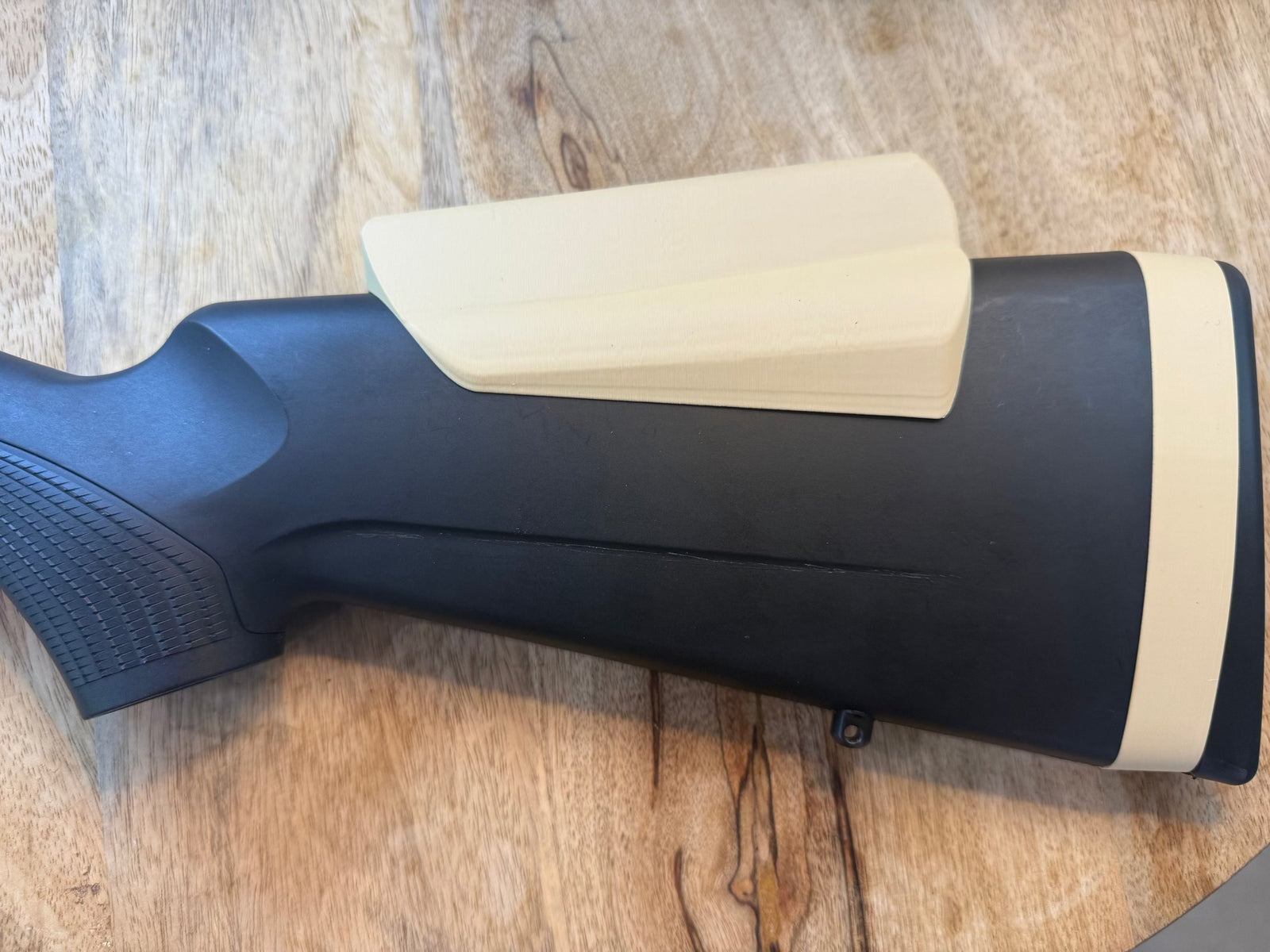
Make your Tikka fit you
The Drop Comb Cheek Riser and LOP Spacer Kit, bundled and set up to work as a system — at a price that beats buying them separately.

