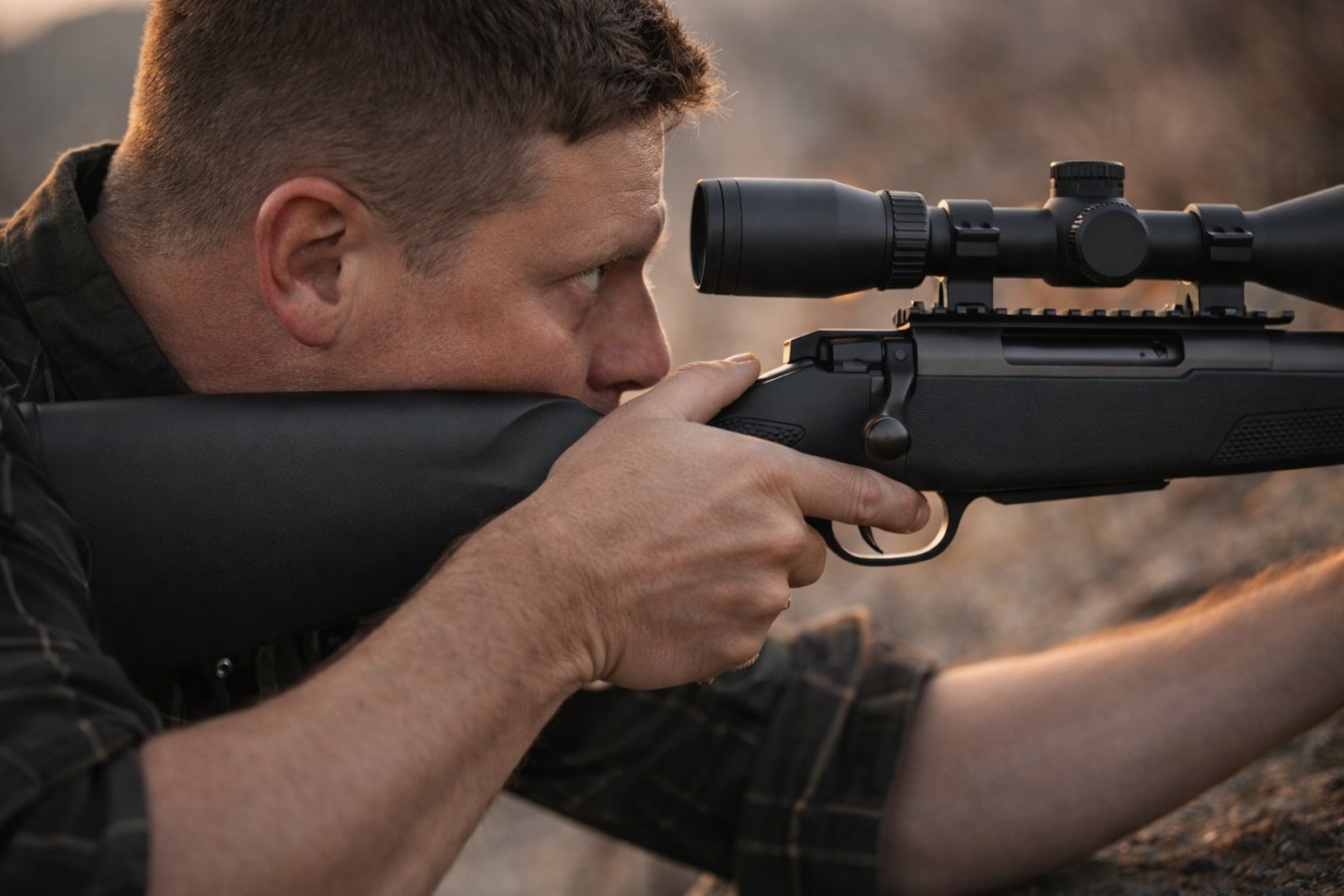
Mount the scope so eye relief is natural first, then check whether ring height has pushed your eye above the factory comb. If your head lifts or rolls to see the reticle, use the Tikka Fit Checklist before choosing cheek height.
Scope mounting is where optic setup and stock fit meet. A scope can be mounted securely and still feel wrong if the eye relief, ring height, and cheek position do not work together.
For a scoped Tikka, the goal is simple: shoulder the unloaded rifle naturally, open your eyes, and find the sight picture without stretching your neck or lifting your cheek.
Why scope height changes cheek weld
Higher rings, rails, larger objective lenses, and some scope designs can move the sight line above the factory cheek position. When that happens, you may lift your head to see through the optic instead of settling into a repeatable cheek position.
If the optic needs to sit higher for clearance, that is fine. Just check cheek height after the scope is positioned. The Drop Comb Cheek Riser is the Nokka path when a compatible factory-stock setup needs more cheek height.
Set eye relief before cheek height
Eye relief should be set from the position you actually shoot from. If you hunt from field positions, check more than a benchrest posture. If you shoot prone, check prone. If you wear heavy clothing, check with that clothing.
Once eye relief is correct, shoulder the rifle naturally and check whether your eye lands behind the scope. If it does not, then adjust stock fit rather than moving the scope to compensate for poor head position.
Choosing ring height
Use the lowest ring height that gives the scope the clearance it needs for the objective, bolt handle, covers, and mounting system. Do not choose very tall rings unless your optic or rifle setup requires them.
After ring height is chosen, check cheek height. If your cheek floats above the stock to see through the scope, use the cheek riser by scope guide or the cheek-riser height guide.
Step-by-step scope mounting order
- Confirm the rifle is unloaded and work in a safe direction.
- Install the base, rail, or rings according to the manufacturer's instructions.
- Place the scope and set eye relief from your real shooting position.
- Level the reticle and tighten evenly to the manufacturer's specification.
- Shoulder the rifle naturally and check cheek height.
- Run the Tikka Fit Checklist before choosing any fit part.
When to add a cheek riser
Add cheek height only if the scope position is already sensible and your natural mount still leaves your eye low behind the optic. Common signs are lifting your cheek, rolling your head, or needing to hunt for the reticle after the rifle is shouldered.
If length of pull also feels wrong, check stock length before final cheek-riser height. If both cheek height and length of pull need work, the Performance Kit bundles the Cheek Riser and LOP Spacer Kit for less than buying those two parts separately.
Eye relief comes first. If your eye is still low behind the optic, choose cheek height. If the stock feels short or cramped after eye relief is set, check length of pull. If both issues show up, the Performance Kit is the cleaner path.
Common scope mounting mistakes
- Setting eye relief from the wrong position. A bench-only setup can feel wrong in field positions.
- Choosing ring height before thinking about cheek height. Clearance matters, but so does where your head lands.
- Moving the scope to fix stock fit. If the stock is the issue, moving the scope can create a new eye-relief problem.
- Skipping the final natural-mount check. The setup is not finished until the sight picture appears from a natural mount.
Final setup check
With the rifle unloaded and pointed somewhere safe, close your eyes, shoulder the rifle naturally, settle into position, and open your eyes. If the reticle is there without head movement, you are close. If not, use the checklist to decide whether the problem is eye relief, cheek height, length of pull, or a mix.
Run the Tikka Fit Checklist ->
Frequently asked questions
What ring height should I use on a Tikka?
Use the lowest ring height that gives your scope enough clearance for the objective, bolt handle, covers, and mounting system, then check cheek height from a natural mount.
Why does my cheek weld feel wrong after mounting a scope?
The scope may be sitting higher than the factory comb naturally supports. Set eye relief first, then check cheek height.
Should I move the scope or add cheek height?
Set eye relief correctly first. If the scope is in the right position but your head lifts or rolls to see through it, cheek height may need work.
Which Nokka product should I choose after mounting a scope?
Use the symptom after eye relief is set. A low eye position points to the Drop Comb Cheek Riser; a short or cramped stock points to the LOP Spacer Kit; both together point to the Performance Kit.
Do I need the Performance Kit?
Only if both cheek height and length of pull need work. If only cheek height is the issue, start with the cheek-riser path.
What should I check before buying a cheek riser?
Check eye relief, ring height, natural mount, and length of pull first. The checklist gives you a structured way to do that.
Make your Tikka fit you
The Drop Comb Cheek Riser and LOP Spacer Kit, bundled and set up to work as a system — at a price that beats buying them separately.

