Quick answer
Cheek riser height depends on objective size and ring height, not the scope logo.
A Vortex, Leupold, Athlon, Maven, or Nightforce scope with the same objective size and ring height usually needs the same cheek-height starting range. Use the scope groups below to choose a starting point, then confirm the fit after eye relief is set on your actual rifle.
Before choosing parts, run the Tikka Fit Checklist to separate cheek height, length of pull, and eye relief.
"How tall a cheek riser do I need for my scope?" is one of the most common questions Tikka owners ask before buying. The honest answer is that scope brand is usually less important than the parts that set optic height: objective diameter, ring height, and whether you are running the factory dovetail or a Picatinny rail.
This guide turns common Tikka scope setups into practical comb-rise starting ranges. It is not a promise that every rifle will land on the same number. Face shape, stock length, shoulder position, and eye relief still matter.
The rule that drives cheek riser height
Your cheek support needs to place your eye naturally behind the scope. The taller the scope sits above the stock, the more comb support you usually need. Two setup choices move the scope higher:
- Objective diameter - a 50-56mm objective usually needs more clearance than a 32-42mm objective.
- Ring and rail height - medium or high rings, especially on a Picatinny rail, raise the whole optic.
That is why two different brands can need the same comb-rise range if the objective and rings are similar. Group by glass size and mount height first, then check the rifle from your real shooting position.
Hunting scopes: usually 44-50mm objective
Common examples include Leupold VX-3HD / VX-5HD, Vortex Viper HS, Maven RS.1, Athlon Midas, and similar hunting scopes. On a Tikka T3x with low-to-medium rings, these typically sit high enough that the factory comb feels low for many shooters.
Typical comb-rise starting range: 10-15mm. This is the middle zone where cheek support often starts to matter, especially once a rail or taller ring set is added.
Long-range and precision scopes: usually 50-56mm objective
Common examples include Vortex Razor HD / PST Gen II, Athlon Ares ETR / Cronus, Maven RS.4, Nightforce NX8, and similar long-range optics. These setups often use a rail and medium-to-high rings for clearance around the objective bell and turret housing.
Typical comb-rise starting range: 15-20mm or more. This is the setup where the factory Tikka comb most often leaves the shooter lifting their head to find the sight picture.
Compact and rimfire scopes: usually 32-42mm objective
Common examples include Vortex Diamondback Rimfire, Athlon Neos, and smaller hunting scopes on a Tikka T1x. With low rings, some rifles may be close to usable without much extra height.
Typical comb-rise starting range: 0-10mm. Add a rail or a larger optic and the same rifle can move into the 10mm-plus range.
Quick reference
| Setup | Objective | Typical rings | Comb-rise starting range |
|---|---|---|---|
| Rimfire / compact | 32-42mm | Low | 0-10mm |
| Hunting | 44-50mm | Low-medium | 10-15mm |
| Long-range / precision | 50-56mm | Medium-high | 15-20mm or more |
These ranges are starting points. The final position depends on your rings, stock length, natural head position, and where the scope sits for eye relief.
Why adjustable height helps when scopes change
Fixed risers can work when you already know the height. They are less forgiving when you are still testing the rifle or when you may change optics later. Moving from a 44mm hunting scope to a 56mm precision scope can move your sightline enough that yesterday's fixed-height solution no longer fits.
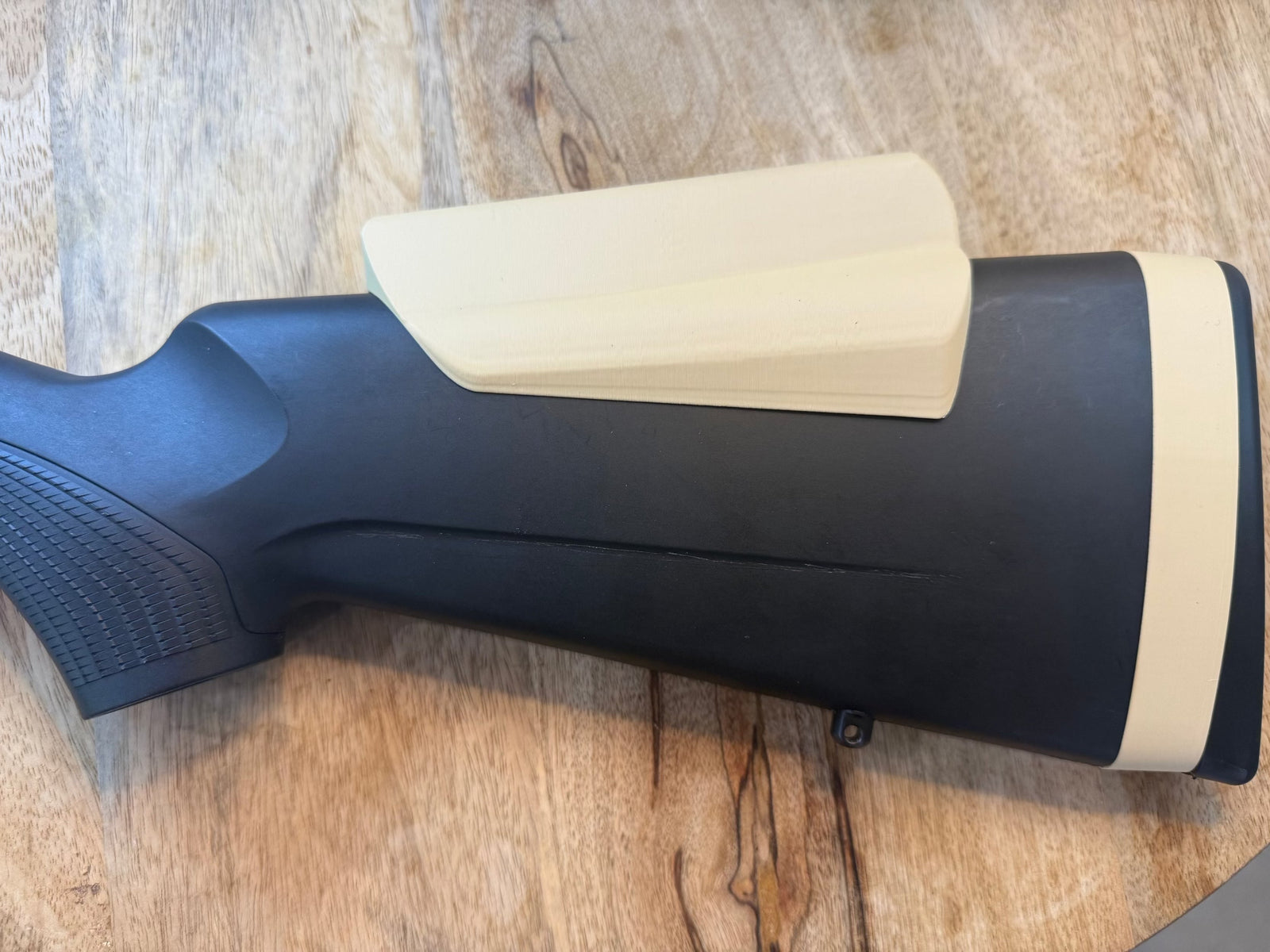
The Nokka Drop Comb Cheek Riser gives the OEM Tikka stock an adjustable cheek-height window. Set the riser on the rifle, check the sight picture, and fix it in place once the position feels right.
- Adjustable height - tune the support around your optic, rings, and head position.
- Tikka OEM-stock fit - made for T3, T3x, and T1x factory-stock comb geometry.
- Removable mounting method - install with double-sided tape or removable glue without permanent stock modification.
- Drop-comb profile - shaped to support the cheek behind a scoped Tikka rather than acting like a flat block on top of the stock.
Confirm the range before you buy
Use this check with the rifle unloaded and pointed in a safe direction:
- Shoulder the rifle with your eyes closed.
- Let your head settle naturally on the stock.
- Open your eyes without lifting or pushing your face into position.
If you see a full, shadow-free sight picture, the comb height is close. If your eye is below the scope image, you need more support. If your eye is forced above the image, the setup is too high.
Set eye relief first, because scope position changes how the rifle feels behind the optic. Then check whether length of pull changes where your head lands, and confirm cheek height last. The full process is covered in the no-guesswork cheek riser height guide and the Tikka scope mounting guide.
The bottom line
Do not choose cheek height by brand name alone. A Leupold, Vortex, Athlon, Maven, or Nightforce scope needs support based on how high it actually sits over the stock. Start with objective size and ring height, then confirm the rifle fit before buying.
If the checklist points to cheek height only, start with the Drop Comb Cheek Riser. If you are also correcting stock length, the Tikka Performance Kit pairs the riser with the LOP Spacer Kit.
Shop the Drop Comb Cheek Riser ->
Frequently asked questions
What cheek riser height do I need for a Vortex or Leupold scope on a Tikka?
Brand matters less than objective size and ring height. A 44-50mm hunting scope often starts around 10-15mm of comb rise, while a 50-56mm precision scope on a rail with medium-to-high rings often starts around 15-20mm or more.
Does scope brand change the riser height I need?
Usually no. Two scopes with similar objective diameter, ring height, and rail setup usually need a similar comb-rise range, even if the brand is different.
What about a 56mm objective on high rings?
That is one of the taller common Tikka setups. Many shooters should start in the 15-20mm-plus range and then confirm the actual sight picture from their natural head position.
Will one adjustable riser cover me if I change scopes later?
It gives you more room to retune than a fixed-height riser. If the new optic sits higher or lower, re-check the rifle fit and reset the cheek support before final mounting.
Should I adjust length of pull before cheek height?
Set eye relief first, then check length of pull, then cheek height. Length of pull changes where your head lands, but scope position should be locked in before judging either fit issue.
Make your Tikka fit you
The Drop Comb Cheek Riser and LOP Spacer Kit, bundled and set up to work as a system — at a price that beats buying them separately.

