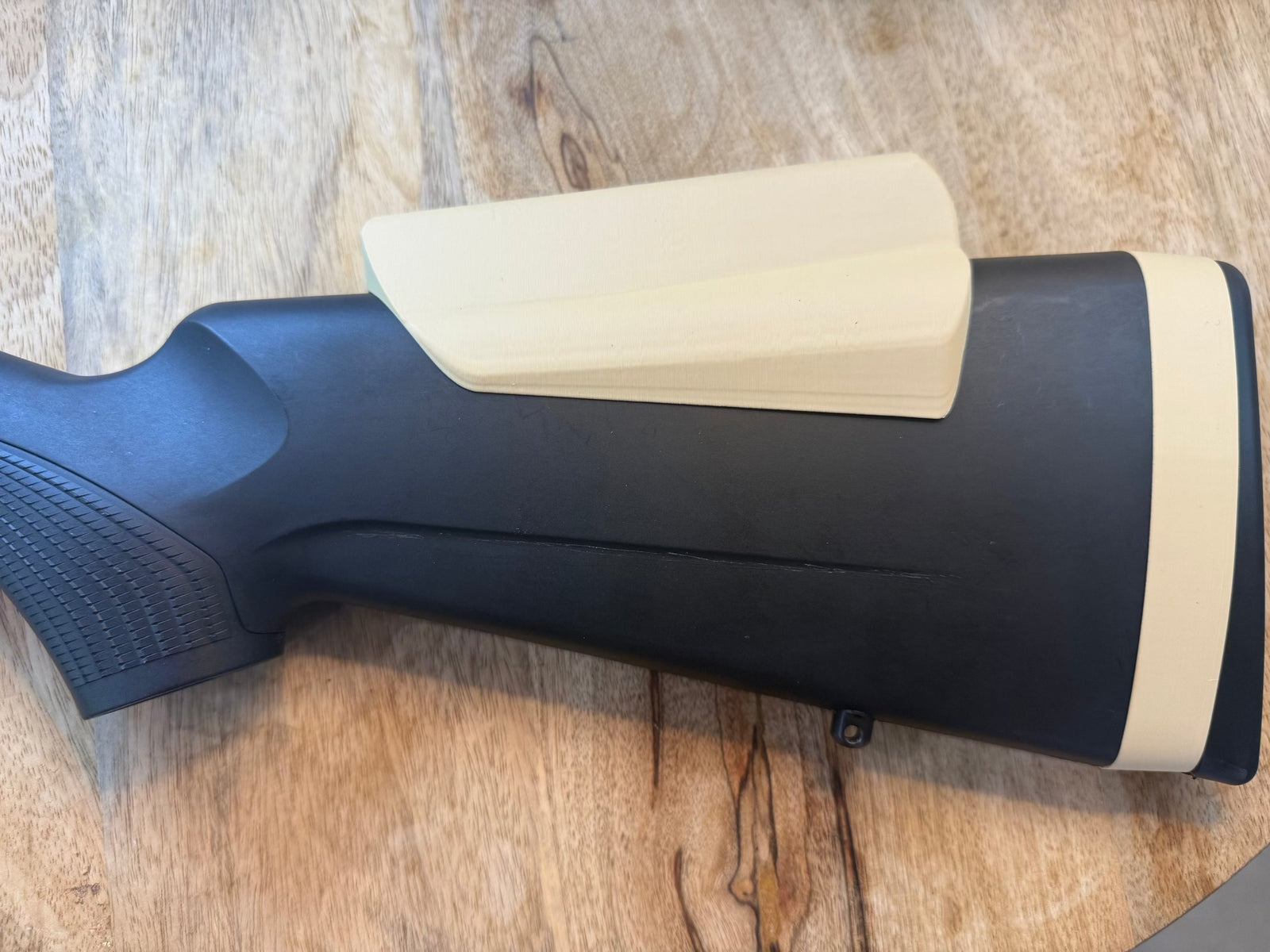
Set up a Tikka T3x scope in this order: choose a mount and ring height that clear the hardware, set eye relief from your natural position, then check length of pull and cheek height before zeroing. If the scope sits above your natural cheek weld, run the Tikka Fit Checklist before choosing a cheek riser, spacer kit, or bundle.
Scope setup is where stock fit, ring height, and eye relief meet. If the optic is too far forward or back, length of pull and cheek-height checks can both feel wrong. This guide keeps the order simple so you can avoid chasing the wrong fix.
The Tikka T3x scope setup order
- Choose ring height that clears the barrel, bolt handle, and objective bell.
- Set eye relief from the position you actually shoot from.
- Check length of pull once your eye relief is correct.
- Check cheek height from a natural mount.
- Level the reticle and torque hardware to the ring manufacturer's guidance.
- Zero with the ammunition you plan to use.
Before finalising a cheek riser or spacer choice, run the Tikka Fit Checklist after eye relief is set.
Choosing ring height for a Tikka T3x
The lowest usable ring height is the one that clears the barrel, objective bell, bolt handle, and any rail or base you use. Lower is not automatically better if it forces your head down or crowds the bolt handle.
| Scope objective | Common starting point | Fit check |
|---|---|---|
| 32-40 mm | Low rings may work on simple hunting or rimfire setups. | Mount the rifle naturally and check whether your eye is centered. |
| 42-44 mm | Low or medium rings are common depending on the optic and base. | Expect to check cheek height carefully before zeroing. |
| 50 mm | Medium rings are a common starting point. | Many factory-stock setups need more comb height. |
| 56 mm or larger | Medium-high or high rings may be needed. | Plan for a cheek-height check before final eye relief. |
A Picatinny rail usually raises the optic compared with direct dovetail rings. That extra height can be useful for ring selection, but it also makes cheek weld more important.
For more examples by optic size, see the cheek riser height by scope guide.
Dovetail or Picatinny rail?
The Tikka T3x receiver has an integral dovetail, and many owners can mount directly to it. Direct dovetail rings keep the scope lower. A Picatinny rail can make ring selection easier and can suit rifles where optics are swapped, but it also adds height.
Choose the base system first, then confirm ring height and cheek weld together. If your head lifts to find the sight picture, the scope setup is not finished even if the rings clear mechanically.
Set eye relief before judging stock fit
Eye relief should be set from the position you use on the rifle, not from a forced bench position. Shoulder the rifle naturally, settle behind it, and move the scope until the sight picture is full without crawling forward or pulling back.
If changing length of pull or cheek height later changes your head position, recheck eye relief before zeroing. The first useful decision is still scope position; then decide whether the stock needs length, cheek height, or both.
Check cheek weld before zeroing
Close your eyes, mount the rifle, settle your face on the stock, then open your eyes. If the scope image is not centered without lifting or pressing your head down, cheek height needs attention.
The Drop Comb Cheek Riser is the Nokka path when a compatible factory-stock setup needs more cheek height. If the same rifle also needs more stock length, the Performance Kit combines the Cheek Riser and LOP Spacer Kit.
Level and torque the scope hardware
Use a stable rest, level the rifle, level the reticle, then tighten hardware to the ring or base manufacturer's specification. Do not rely on feel for small ring screws, and do not exceed the hardware maker's guidance.
After tightening, cycle the bolt fully and confirm clearance around the ocular bell. Then shoulder the rifle again and confirm eye relief one more time before the final zero.
Use the fit checklist before buying parts
If the scope is already mounted and the rifle feels awkward, do not guess which part is responsible. The checklist separates eye relief, cheek height, length of pull, and trigger feel so you can change the right thing first.
- For the fit sequence: Tikka Fit Checklist
- For cheek height: Drop Comb Cheek Riser
- For cheek height and stock length together: Performance Kit
- For scope-height examples: Cheek riser height by scope
Run the Tikka Fit Checklist ->
Frequently asked questions
What rings do I need for a Tikka T3x?
Ring height depends on your scope objective, base system, bolt-handle clearance, and cheek weld. Choose a height that clears the hardware, then confirm that your eye is centered behind the scope from a natural position.
Should I set eye relief before adding a cheek riser?
Yes. Set eye relief with the actual scope and rings first, then check whether cheek height or length of pull is still the problem. Re-check the sight picture after any stock-fit change.
Is a Picatinny rail better than direct dovetail rings on a Tikka?
Neither is automatically better. Direct dovetail rings can keep the optic lower, while a Picatinny rail can simplify ring choice or optic changes. The right choice depends on the rifle, optic, and required cheek height.
How do I know if scope height is causing cheek-weld problems?
Mount the rifle with your eyes closed, settle naturally, then open your eyes. If the sight picture is low, high, or off-center without shifting your head, check cheek height and eye relief before zeroing.
Make your Tikka fit you
The Drop Comb Cheek Riser and LOP Spacer Kit, bundled and set up to work as a system — at a price that beats buying them separately.

