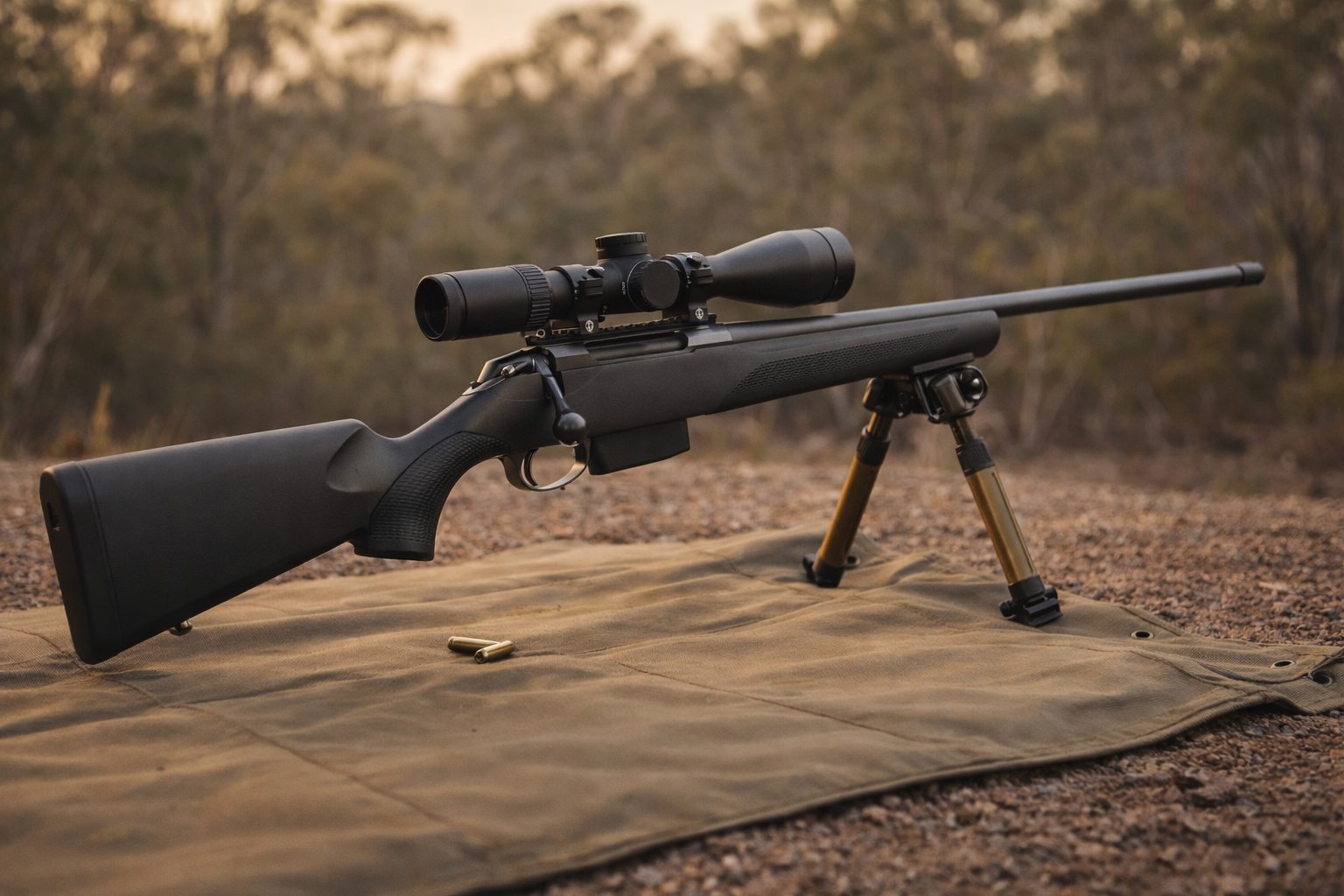
A Tikka T3x can use direct dovetail rings, one-piece dovetail mounts, or a Picatinny rail plus rings. Choose the mount system first, then confirm ring height, bolt clearance, cheek weld, and eye relief together. Before buying cheek-height or spacer parts, run the Tikka Fit Checklist on your actual rifle.
Scope mounts are not just an optic choice. On a Tikka T3x, the base and ring height decide where your eye sits behind the glass. A mount that clears the scope mechanically can still put your cheek too low for a repeatable sight picture.
What scope mounts fit a Tikka T3x?
Most Tikka T3x owners choose one of three mount paths:
- Direct dovetail rings: rings that clamp to the receiver dovetail and keep the optic low.
- One-piece dovetail mounts: an integrated base-and-ring unit that keeps setup simple.
- Picatinny rail plus rings: a rail on the receiver with standard Picatinny rings, useful when you want more ring choice, extra elevation, or shared optic hardware.
Confirm exact fitment with the mount maker. The important Nokka-side question is what the chosen mount height does to cheek weld.
Dovetail rings or Picatinny rail?
Direct dovetail rings usually keep the scope lower and lighter. That can help a factory-stock hunting rifle feel natural behind the optic.
A Picatinny rail can make ring selection easier and can suit long-range builds, optic swaps, or setups that need extra elevation. The trade-off is height: the rail adds distance between the stock comb and the scope centerline.
If you are not sure which direction to go, choose the mount system around your optic and shooting use, then run the fit check before final zero.
Choosing ring height
Ring height needs to clear the objective bell, barrel, bolt handle, and any rail or base. It also needs to put your eye in a repeatable position behind the scope.
| Setup choice | Why people choose it | Fit check |
|---|---|---|
| Low dovetail rings | Low scope position for simple hunting setups. | Check barrel and bolt clearance, then cheek weld. |
| Medium rings | Common with larger hunting objectives. | Often needs a cheek-height check before zero. |
| Picatinny rail plus rings | More ring options, optic swaps, or extra elevation. | Plan for extra scope height compared with direct rings. |
| 20 MOA rail | More elevation range for distance work. | Useful only if the optic and use case need it. |
For ring-height order and eye-relief setup, see the Tikka T3x scope setup guide.
Will a higher scope mount hurt cheek weld?
A higher mount does not automatically create a problem, but it makes the cheek-weld check more important. If your head lifts off the stock to see through the optic, the mount height and factory comb height are working against each other.
Close your eyes, mount the rifle naturally, settle your cheek, then open your eyes. If the scope image is not centered, check cheek height before assuming the scope or mount is wrong.
When a cheek riser becomes the next step
If the mount system and ring height are correct but your eye still sits below the scope, cheek height is the issue to solve. The Drop Comb Cheek Riser is the Nokka path for compatible factory-stock setups that need more comb height.
If your scope position also shows the stock is short for your body, the Performance Kit combines cheek-height and length-of-pull parts. Use the checklist first so you are not buying a bundle for a one-part problem.
Do you need a 20 MOA rail?
A 20 MOA rail angles the optic so the scope has more usable elevation for longer-distance shooting. It is helpful when your cartridge, distance, and scope travel require it. For normal hunting distances, many Tikka owners do not need one.
If you use a rail, remember that it usually raises the optic. Recheck cheek weld and eye relief after the mount is installed.
Mounting order before zero
- Choose direct rings, a one-piece mount, or a rail based on optic and use.
- Choose ring height that clears the scope and bolt handle.
- Set eye relief from a natural mount.
- Check length of pull and cheek weld after eye relief is correct.
- Level the reticle and torque hardware to the mount maker's guidance.
- Zero with the ammunition you plan to use.
For scope-height examples by optic size, use the cheek riser height by scope guide.
Use the checklist before buying parts
The mount may be the right mount and still expose a stock-fit issue. Use the checklist to separate mount height, cheek height, eye relief, and length of pull before choosing parts.
- For diagnosis: Tikka Fit Checklist
- For cheek height: Drop Comb Cheek Riser
- For cheek height and stock length together: Performance Kit
- For setup order: Tikka T3x scope setup guide
Run the Tikka Fit Checklist ->
Frequently asked questions
What scope mounts fit a Tikka T3x?
Tikka T3x rifles commonly use direct dovetail rings, one-piece dovetail mounts, or a Picatinny rail with standard rings. Confirm the exact mount with the maker, then check ring height, bolt clearance, cheek weld, and eye relief together.
Are dovetail rings better than a Picatinny rail on a Tikka?
Neither is always better. Direct dovetail rings keep the optic lower and simpler. A Picatinny rail gives more ring options and can suit long-range or optic-swap setups, but it usually adds scope height.
What ring height should I choose for a Tikka T3x?
Choose the lowest height that clears the objective bell, barrel, bolt handle, and base system, then confirm your eye is naturally centered behind the scope. If the sight picture is high above your cheek weld, check cheek height before zeroing.
Do I need a cheek riser after changing scope mounts?
You may need one if the new mount height puts the scope above your natural cheek weld. Mount the rifle with your eyes closed, open your eyes, and check whether the sight picture is centered without lifting your head.
Make your Tikka fit you
The Drop Comb Cheek Riser and LOP Spacer Kit, bundled and set up to work as a system — at a price that beats buying them separately.

